The Uber clone setup is done, and you’ve customized it to match your business needs. You’ve built your ride hailing app, and all that’s left is to go live, so you do just that. But having a working app doesn’t mean people will automatically start using it.
Once you’ve made your app available to the public, if you don’t have a strong marketing strategy, you could find yourself waiting for bookings while your app store downloads barely move, with most of the few downloads coming from your close network.
So, how do you bring in your first 1,000 users when you need to get both drivers and riders interested at once?
Why Getting the First Users Is So Hard for Ride-Hailing Apps
Most people building an Uber clone do not want to hear this unpleasant truth: while the ready-made foundation accelerated your launch, you still have to find people to use it and keep the rides coming.
Plenty of new ride-sharing apps fail by expanding everywhere before establishing themselves anywhere. The Startup Genome Premature Scaling Report, for instance, found that 74% of high-growth internet startups fail because they scale too early.
This brings up a problem businesses must take care of before investing in marketing: the age-old chicken-and-egg problem. If there are no active riders, drivers won’t stay on the app. And riders won’t download an app that barely has any drivers available.
Even if your ads are effective and attract new users, failing to address this marketplace imbalance will make it difficult to secure your app’s first ride bookings.
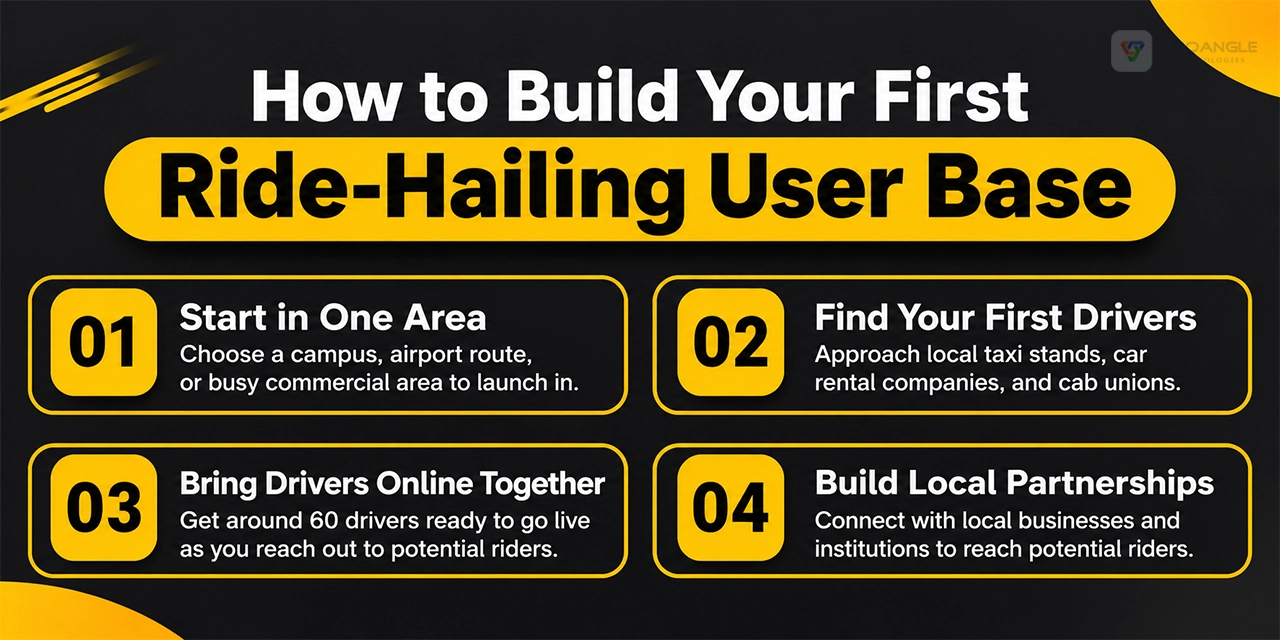
Why Your Ride-Hailing App Should Start in One Area
This may be the biggest decision you make in your first 90 days. If you launch across the entire metro area at once, wait times could spike, riders may get frustrated, and drivers might stop driving after waiting too long for a trip request.
But starting with smaller areas that see regular foot traffic, such as campuses, airports, and office hubs, can give your drivers a better chance of getting bookings without having to spread across the city.
Here are a few simple factors to consider when choosing your zone:
- Public areas where a large number of people frequently pass through.
- A lack of affordable, fast, and reliable ride-booking alternatives.
- A connected community that keeps the conversation going (having a Facebook community or WhatsApp group that is active).
When you control that area, you move out. Not before.
Bring Your First 50–100 Drivers Onboard
Before you start counting your first 1,000 users, make sure you have enough drivers ready to take them places.
And where do you find these drivers? Well, plenty of them will be busy taking rides through your competitors’ apps. But not every driver has signed up for one. Some are still waiting at local taxi and transport stands.
Go to them, and don’t just shove your flyer in their hand; have a one-on-one chat over a cup of tea and bring them your elevator pitch; keep it simple.
- Explain that your commission is lower than the large platforms, and that means they’ll get more for every ride they complete.
- Mention the promptness of their payment.
- Demonstrate that they can get regular rides in this neighborhood so they won’t be cruising around needlessly and wasting fuel.
Most people overlook this step: sign up drivers in groups over a few weeks. Dropping 10 drivers live too early can cause them to be underutilized and spend their time waiting for bookings. Some may quit before your marketing gets an opportunity to attract riders.
So, create a list of around 60 drivers and bring them all online just as you send your first marketing message to potential riders. This makes sure your drivers don’t arrive too early and your riders don’t arrive too soon.
Also, check in with them every day for the first 14 days. Ask, “What isn’t working?” If the driver has a problem and you fix it in 24 hours, they tell other drivers. This is free recruitment.
Look Beyond Ads: Find Riders Where People Already Gather
A local ride-hailing app is not the best place to run paid ads, and they are usually not very effective. The ones who are willing to try your new ride-sharing app won’t be waiting for you to post an Instagram sponsored video.
| Target | How to approach | Why it works |
| Hotels | • Target local hotels • Discuss with the concierge or front desk manager. • Give them a simple thing: A referral code they can share with their guests to get a first ride discount. | The hotel staff will recommend your app when guests ask for transportation recommendations. This way, they don’t have to maintain their own transport service. |
| Corporate offices | • HR managers will be willing if you provide reasonable transportation solutions for their employees. • Provide monthly billing and a small-group discount for a corporate account. | Companies provide an added employee benefit, while employees enjoy discounted rides. |
| College Campuses | • Cooperate with student associations. • Organize a miniature event. Post flyers in the library or campus cafeteria. | Students in college are price-conscious, social, and adventurous. When 10 students use your ride-hailing app and have a great experience, 50 more will hear about it within a week. |
Also, offering incentives to your users could be a better way to attract the first 1,000 people to your ride-hailing app. Once you’ve taken all the steps available to attract users, shift your focus to monitoring results.
How to Tell If Your Uber Clone Is Gaining Traction
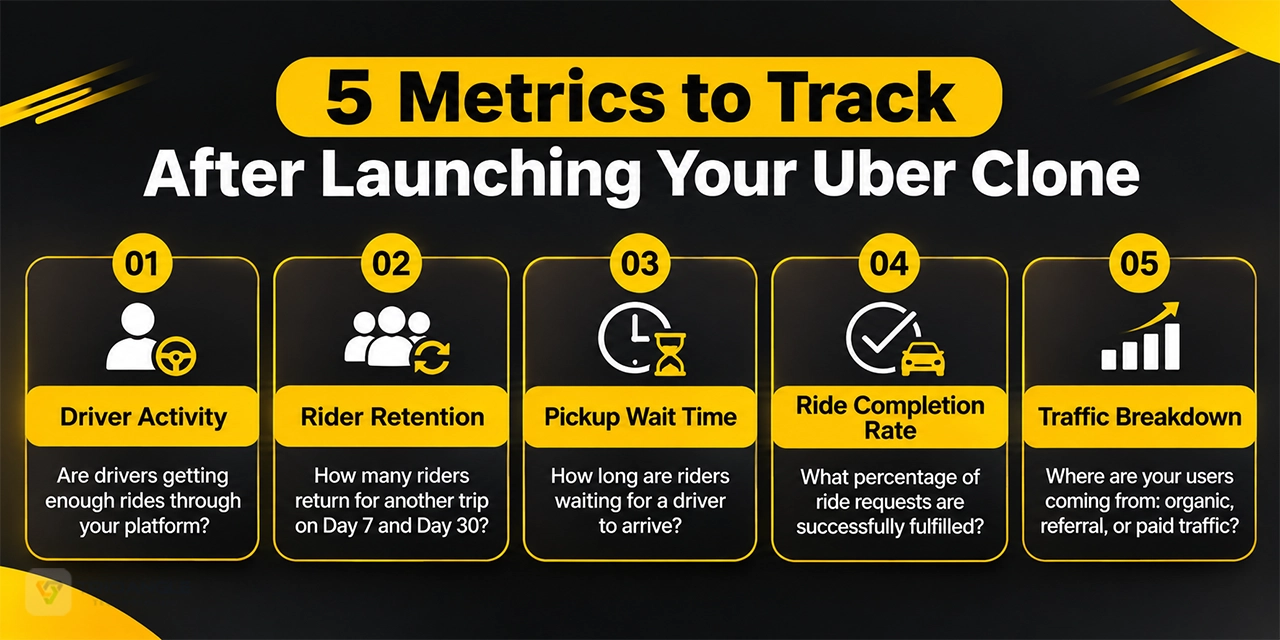
Forget about download metrics for a second, because if you want to measure success, then you should measure these.
| What to track | What to look for |
| Driver Activity | Are drivers getting their required rides on the platform? |
| Rider retention (Day 7 and Day 30) | How many riders returned for their second ride? |
| Wait Time | What is the average wait time? If it is longer than 8 minutes, then it needs tightening. |
| Ride Completion Rate | What percentage of ride requests are fulfilled? |
| Traffic Breakdown | What’s the organic, referral, and paid traffic breakdown? |
When you have measured that, and your user retention is less than 20%, do not rush to add new users. Before investing more money in marketing, investigate why riders are not returning. Set up a community forum and encourage riders to share honest feedback.
You can also use a short form and offer an incentive for completing it. Yes, it comes at a cost, but finding out why riders leave is cheaper than constantly replacing them.
Final Words
The first 1,000 users are more of a sales and operations problem than a technical one.
Once your Uber clone app is live, get out there and connect directly with people who need better, more reliable transport options. Make local connections first and don’t expect all the early work to happen through a marketing campaign.
Get the first 50 users by picking up the phone. Then work your way to the next 200. From there, it’s about finding what works and doing more of it.
That is how you get to 1,000.