

Startups may think: Can I launch a ride-hailing business in another country without living there?
Yes, you can launch your own ride-hailing platform in your target country while living in your home country. Starting a business in another country is not that difficult if you consider important things like market research, rules and regulations, and how you are going to manage your team.
In this blog, we will look at how you can start a ride-hailing business from abroad without moving there.
Important Things to Consider When Managing a Ride-Hailing Business Overseas
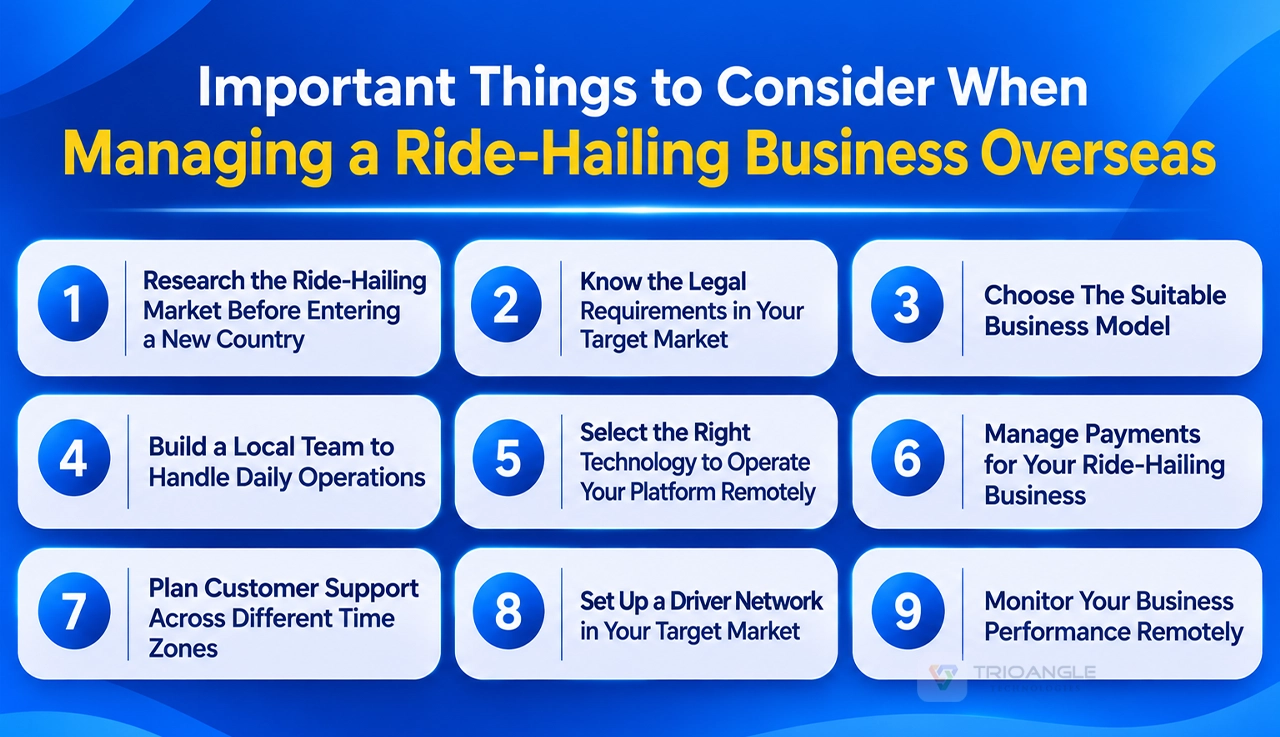
Starting and managing a ride-hailing platform overseas is not that difficult when you understand the local market, know how to handle your team, and are aware of the legal requirements, such as business licences and local regulations.
In this section, we will look at the factors you need to consider when starting and managing a taxi-booking business in another country while living in your home country.
1. Research the Ride-Hailing Market Before Entering a New Country
You will need to conduct some research on the ride-hailing industry in your target market. Each country will have its own market growth, expectations, travelling habits, and requirements. This will give you a better understanding before getting started with development.
Understand your target audience’s needs and expectations, and how they commonly travel. Look at how they book rides and whether they use mobile apps or other local transportation options.
Identify which areas of your target market have a high potential for ride bookings. If an area has a lot of busy workplaces, airports, tourist spots, and little public transport, there may be a high demand for rides.
Another thing to consider is checking your competitors’ strengths and weaknesses. You may think this is a basic step, but it actually helps you identify market gaps, understand what works well, and find out where existing services fall short. Identify the obstacles customers face when booking a ride. This information can help you create a platform based on their needs.
2. Know the Legal Requirements in Your Target Market
Every country will have different requirements for starting a business. When entering a new market, you should examine whether you need to register a local company, apply for a business license, or get authorization to operate a ride-hailing service.
Also, look into the transportation requirements for ride-hailing businesses. Some countries have specific conditions for businesses that connect passengers with drivers through mobile apps. These may also vary between cities or states, so check the requirements in the location where you plan to operate.
You also need to know what documentation the drivers will need to get onto your platform, including driver’s licenses and vehicle documents.
Because you are starting a ride-hailing platform in another nation, you should speak with a local legal professional to find out about the regulations that apply to your business.
You can also check the following areas to understand the local requirements before starting your ride-hailing business:
| Area | Requirements to Cover |
| Business Setup | • Rules for foreign business ownership • Whether you need to register a local company • Requirements for a registered business address • Local business license and tax registration |
| Transport Approval | • License required to operate a ride-hailing business • Permits required by local transport authorities • Rules for setting ride fares • Areas where your service is allowed to operate • Rules for airport pickups and advance bookings |
| Vehicle Protection Requirements | • Commercial vehicle registration • Required vehicle signs or identification stickers • Vehicle insurance requirements |
| Mandatory Coverage | • Passenger insurance coverage • Third-party liability coverage • Driver and vehicle insurance requirements • Minimum insurance coverage required by local authorities |
| Data & Privacy Control | • Rules for collecting customer and location data • Privacy policy requirements • Rules for storing customer and trip details • Requirements for transferring data across countries |
3. Choose the Suitable Business Model
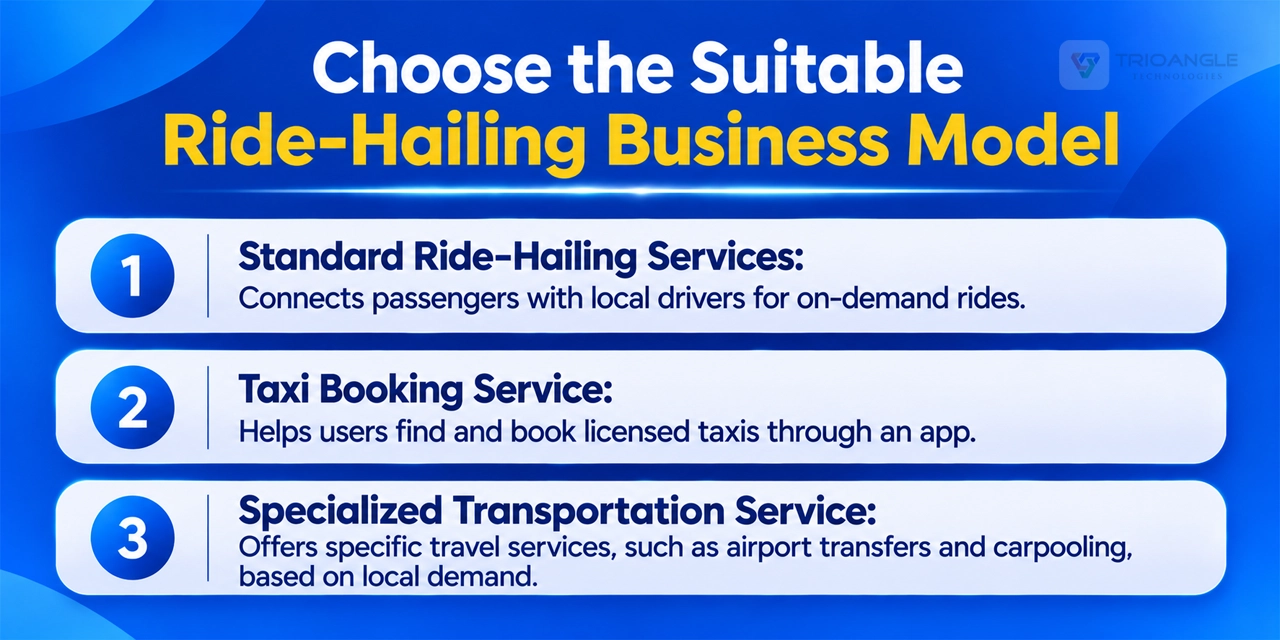
Once you have analyzed your target ride-hailing market, you need to pick an appropriate business model that will meet local transport requirements. There are several options to consider, including:
- Standard Ride-hailing Services:
An app is used to connect riders with local drivers so that riders can request a ride whenever they need one.
- Taxi Booking Service:
Enables users to find licensed taxis through your platform. This will help users to find local taxi drivers or operators.
- Specialized Transportation Service:
Focus on specific travel needs by offering services such as airport transfers or carpooling, based on customer demand in your target market.
Think about how your ride-hailing platform will work, including how riders and drivers will use the platform to book and manage rides, how drivers will receive ride requests, and how the app will connect riders with drivers.
Next, decide how your platform will generate revenue. For example, your platform can earn revenue through commission fees, dynamic pricing, or subscription plans for users. You can choose and customize the revenue model based on your target market and business needs.
4. Build a Local Team to Handle Daily Operations
This is another important factor to consider when launching your platform in a new country. Build a local team to manage daily operations and resolve platform issues. Set up a dedicated communication channel to stay connected with them.
Apart from handling daily operations, you should also hire a team to manage customer queries and booking-related issues. This will help keep your platform running smoothly without unnecessary difficulties.
5. Select the Right Technology to Operate Your Platform Remotely
Technology is essential when launching a ride-hailing platform in another country. You need a system that lets you manage it remotely without being physically present there.
A single digital platform includes the customer app, driver app, and admin panel. From the panel, you can follow bookings, review activity from drivers and customers, and manage other operations remotely.
You may develop the platform from scratch or choose a prebuilt solution, like an Uber clone script. The right choice depends on your requirements and resources.
Make sure the technology can adapt as your business grows. You should be able to add features, change existing functions, and check important business data wherever you are. These capabilities make remote management easier.
6. Manage Payments for Your Ride-Hailing Business
Before launching a taxi-booking app abroad, find out how payments work in your target market. Each country has its own currency and preferred local payment methods, so tailor your app’s payment options to local habits.
Some common payment methods used in the ride-hailing industry around the world include:
- Credit and Debit Cards
- Digital Wallets
- Cash Payments
- Alternative and Real-Time Payment Methods (APMs)
7. Plan Customer Support Across Different Time Zones
Customer support can be an important part of your ride-hailing platform. Users may need support at different times of the day, so you should consider when you will offer support based on your operating hours and target market.
You can also appoint local support representatives to respond to urgent customer concerns, including booking cancellations and driver complaints. Ensure they handle common problems and identify situations that require your attention.
8. Set Up a Driver Network in Your Target Market
Once you set up the platform, you need to establish a driver network in your target market and find people who are interested in joining.
Simplify the onboarding process so drivers can register easily and understand how to use the platform. Show them how to get ride requests, accept bookings, review earnings, and manage their availability in the app.
Since you manage the business from overseas, use the platform to monitor driver registrations and activity. This can help you assess whether the number of drivers in your operating areas is sufficient for demand.
9. Monitor Your Business Performance Remotely
After launching your ride-hailing service, use the platform’s analytics and reports to track its performance. Follow completed rides, booking requests, and cancellations to see how the business is developing over time.
You should monitor driver activity and customer feedback to identify opportunities to improve. For example, frequent ride cancellations or negative reviews may reveal issues that need attention.
And keep track of your business income and expenses to understand how your platform is performing. Check the earnings from rides, daily operating costs, and commissions.
This will help you make informed decisions and keep your business running smoothly without needing to visit the operating location regularly.
Final Thoughts
In this blog, we explored how to set up a ride-hailing platform from abroad. Launching a ride-hailing app in another country becomes easier when you choose a target market with good demand, understand its local rules and regulations, and have a local team to manage daily operations.
You should also consider local payment methods and adapt the app’s features and workflow to suit the needs of your target market. When it comes to development, you can either build an app from scratch or choose a ready-made taxi app.