From multi-jurisdiction compliance chaos and zero user trust to a high-performing, security-hardened trading platform, built, tested, and live in six structured weeks.
Challenges the client faced
The client faced several critical challenges in establishing a competitive centralized platform. Managing complicated and growing regulatory requirements, such as KYC and AML compliance across multiple jurisdictions, created operational challenges and slowed early development.
At the same time, poor user trust posed a significant barrier, as concerns about platform security, asset protection, and potential cyber risks made it difficult to attract and retain early adopters.
Furthermore, limited liquidity in the early stages hampered smooth trade execution, resulting in slower transaction rates and a less efficient trading experience.
How Trioangle Approached its Challenges to Solutions
To deal with tricky compliance rules, we built a flexible system with ready-to-use KYC and AML verification. This setup easily adapts to the laws of different countries, keeping the exchange out of legal trouble.
When it comes to low user trust and security issues, our platform addresses them by locking it down with multi-layer encryption, two-factor authentication, KYC/AML verification, and highly secure wallet integration, so traders know their money is safe.
Nobody wants to wait for a trade to go through. By connecting to external liquidity sources and enhancing the trading system, buy and sell orders are executed almost instantly. This will improve the user’s trading experience smoothly and quickly.
Week-by-Week Development Roadmap: From Kickoff to Launch
Week 1 (Days 1–7)
- Requirement analysis
- Market research
- Architecture planning
- UI/UX wireframing
The process begins with requirement analysis and market analysis to establish the project scope, followed by architectural design to scale the system, and lastly UI/UX wireframing for visualization of the structure of the platform.
Week 2 (Days 8–14)
- UI/UX design finalization
- Frontend development initiation
- Backend framework setup
- Database design
After this, the team completes the UI/UX design to improve the user interface. Next, they develop the front-end and the back-end framework. Meanwhile, they design the database to manage the data better.
Week 3 (Days 15–21)
- Core feature development (spot, margin, P2P modules)
- Wallet integration
- API development
Following development, essential functions such as spot, margin, and P2P modules are introduced, followed by wallet integration for secure transactions and API construction to enable smooth interaction between components.
Week 4 (Days 22–28)
- Trading engine integration
- Liquidity integration
- Security feature implementation
Next, the trading engine is included to handle order execution effectively, followed by liquidity integration to enable smooth trading operations, and security measures are introduced to protect the platform.
Week 5 (Days 29–35)
- Testing (functional & performance)
- Bug fixing
- Admin panel setup
After development, the platform is tested for functionality and performance, with bug fixes to solve identified issues, and finally, the admin panel is configured to handle operations correctly.
Week 6 (Days 36–45)
- Final testing & QA
- Deployment setup
- Go-live & post-launch support
Finally, the centralized platform undergoes final testing and QA to verify stability, followed by deployment configuration for launch preparation, and goes live with after-launch support to preserve performance.
Key Features Delivered
Trading features
Spot trading – Buy and sell cryptocurrencies at the current market price.
Margin trading – Trade with borrowed funds to increase the potential benefits.
Future trading – Trade contracts that speculate on future asset price changes.
P2P trading – Buy and sell cryptocurrencies directly, without any third party.
Order matching engine – Matches the buy and sell orders instantly and effectively.
Liquidity integration – Connects with the external liquidity source for smooth trade execution.
Multiple order types – Supports limit, stop-limit, market, and other advanced order types.
Multiple trading pairs – Provides multiple cryptocurrency pairs for diverse trading options.
User features
User registration & login – Secure signup and login process for users.
KYC verification – identity verification process ensures compliance and platform security.
Wallet integration – Connect and maintain cryptocurrency wallets on the platform.
Deposit & withdrawal – Easily deposit and withdraw the assets at any time securely.
Transaction history – Track all previous transactions with detailed time stamps and records.
Portfolio management – Monitor asset performance and control investments in a single spot.
Admin features
Admin dashboard – Centralized panels monitor the platform’s efficiency and activities.
User management – Manage the user accounts, roles, and platform access levels.
KYC/AML management – Ensure identity verification and compliance for all users.
Transaction monitoring -Track and evaluate all the users’ transactions on the platform.
Fee management – Configure and control the trading fees and rewards structures.
Report & analytics – Build insights from data to assist business decisions.
Security features
Two-factor authentication (2FA) – Adds an extra layer of validation for security beyond passwords.
End-to-end encryption – The secure data transmission between the user and the exchange platform.
Multi-signature wallets – Require various approvals to authorize and complete transactions.
Anti-DDoS protection – Avoids distributed attacks that affect platform performance and availability.
Secure API integration – Enables safe interaction between systems using encrypted protocols.
Data protection mechanisms – Safeguard sensitive information against unauthorized access and breaches
Device Compatibility
- Web
- iOS
- Android
Technologies Used
- Flutter
- Dart
- Node.js
- TypeScript
- GraphQL
- Socket.io
- MongoDB
- Angular
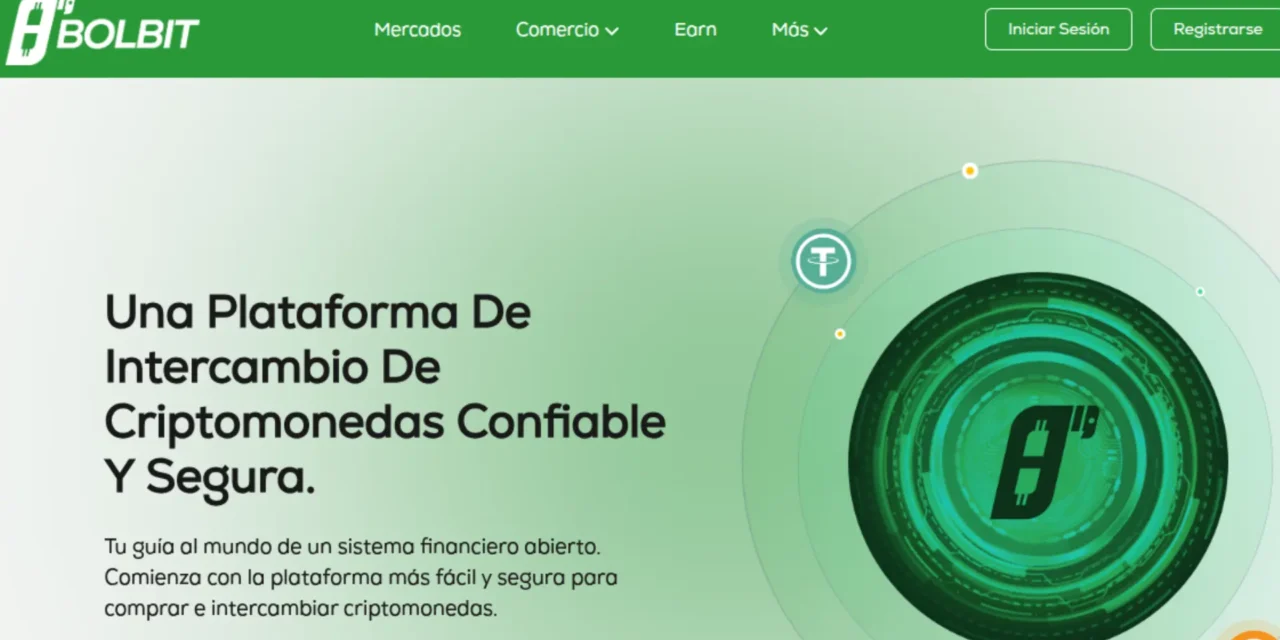
BolBit – Being the Trusted Exchange in the Spanish Market
At the end, the BolBit overcame its initial challenges and developed into a high-performing cryptocurrency exchange due to effective strategy and execution. The centralized platform quickly gained appeal after incorporating unique features, strong security, and better trading performance. BolBit is currently growing and gaining recognition as a dependable exchange in the Spanish market.