Overview
| Client | Matthias Dickerhof |
| Business | BroTravels |
| Location | Germany |
| Industry | Travel, Accommodation & Property Marketplace |
Background
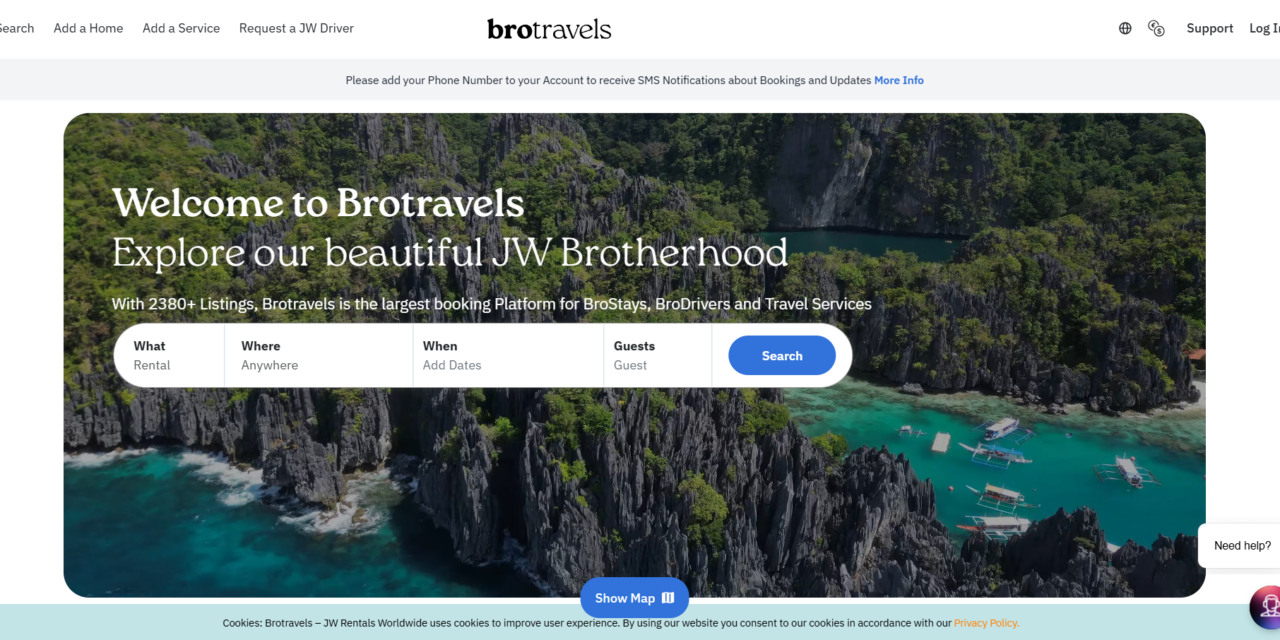
The long-term relationship between Matthias Dickerhof, owner of the German accommodation platform BroTravels, and his technology partner, Trioangle Technologies, shows how a software project can grow into a collaborative technical alliance.
The relationship began in October 2019 when Dickerhof sought to modernize his existing accommodation website, brobnb.net. Rather than launching a new business from scratch, his goal was to migrate an active business onto a modern framework while preserving his established workflows, as the previous platform had limited scalability and was not well equipped to accommodate a high volume of visitors.
Over nearly seven years, this engagement evolved from a one-time product purchase into a strategic partnership.
Challenges
Brobnb operated as a directory-based platform rather than a traditional vacation rental booking engine. Guests could search for properties and send booking inquiries, while all accommodation payments were handled directly between hosts and guests outside the platform. Matthias wanted to preserve this business model without requiring users to make online payments through the platform. Another key concern was data migration, as the existing platform already contained active property listings and host information that could not be lost. Therefore, it was essential to determine whether the existing data could be safely migrated to the new database.
The platform also had three existing host subscription tiers that generated revenue and therefore needed to be fully supported by the new software. The Premium plan offered additional benefits such as badges and improved search visibility, the Medium plan allowed hosts to include links to their external Airbnb listings, and the Basic plan provided essential features such as calendars and contact information.
These subscription features needed to be retained and integrated into the new system without affecting the existing business model.
Objectives
The core objectives of the project were to:
- Migrate historical database listings and active host data to the new system without disrupting the live business.
- Customize the standard marketplace checkout flow to support a localized, tier-based host subscription model.
- Integrate automatic iCal synchronization so hosts can manage their availability calendars across external rental platforms.
- Transition the platform’s mobile and web offerings into a reliable, easy-to-use experience.
Expectations of Client
| Execution speed + communication + support responsiveness |
Analysis
Standard software packages usually assume a transactional booking model where the platform processes payments for every reservation. Adapting these packages to a directory model required decoupling standard features. Furthermore, third-party integrations, such as payment tools and iCal synchronization, are not simple plug-and-play features.
They require extensive custom logic, cron jobs, database mapping, and error-handling systems. Over years of operation, maintaining separate native codebases for Android and iOS also introduced significant maintenance overhead, development drift, and platform-specific bugs.
How Trioangle Team Assisted the Platform
Our team assisted the client by delivering the following aspects:
- Technical support
- Bug investigation
- Payment troubleshooting
- Solution for calendar issues, application crashes & search problems
- Project Management
- Support-ticket management
- Third-party integrations
- Database corrections
- Production troubleshooting
- New feature analysis
Solution
We adapted our base software package to meet Dickerhof’s specialized business and subscription requirements. As the marketplace matured, the engineering team shifted from fixing isolated bugs to performing root-cause analysis on connected workflows. To minimize risks during updates, the team set up a dedicated staging environment, ensuring that all changes were validated before being published to production.
To address long-term mobile drift, the team proposed migrating the native Android and iOS apps to a single, cross-platform Flutter codebase to streamline maintenance and align the user experience with top travel platforms.
Implementation
The implementation moved through several stages. First, the team analyzed the original database structure to map and migrate listings to the new platform. Host subscription flows were integrated directly, so the system could automatically adjust listing access based on active packages. In 2026, the team completed key system upgrades, including updating outdated third-party payment APIs and SDK libraries.
When a change to host fees impacted active database records, engineers used backups to perform a targeted recovery, manually correcting 195 transaction records to protect historical data. To accommodate Dickerhof’s current priorities, the team structured a phased plan, focusing first on a custom payment authorization and hold workflow (similar to Airbnb’s booking request system) while scheduling the Flutter mobile migration for a later phase.
Outcomes
- By August 2026, the partnership remained highly active and productive across multiple tracks. The platform successfully optimized Google Maps API usage by analyzing active data consumption, directly lowering ongoing third-party operational expenses.
- The number of listings on the platform has expanded from 50 to 908, highlighting the platform’s vast and rapidly growing rental ecosystem.
- Trioangle provided subscription-based listings, enabling users to access premium features and services via subscription plans.
- More than 40,000 users are registered on the platform, reflecting its growing adoption and strong user engagement.
- Dickerhof confirmed that multiple outstanding tracking tickets on JIRA had been successfully resolved, and production stability remained high. Active development on the payment hold feature was underway, maintaining a healthy, rolling update cycle.
Discussion
This project shows that a digital marketplace is a connected system, where a small change in one area can have a profound impact. It also shows that technology teams should not only focus on fixing individual issues. They need to find and fix the main cause of the problem to keep the platform stable. A clear process for managing issues and taking responsibility for tasks is also important for building and maintaining client trust.
Final Thoughts!
The BroTravels journey highlights that a digital platform evolves continuously. By combining structural flexibility, proactive support, and staging-validated deployments, the partnership has kept a live German travel marketplace active and stable for nearly seven years.
The collaboration continues to move the platform toward a simpler, more modern user experience.