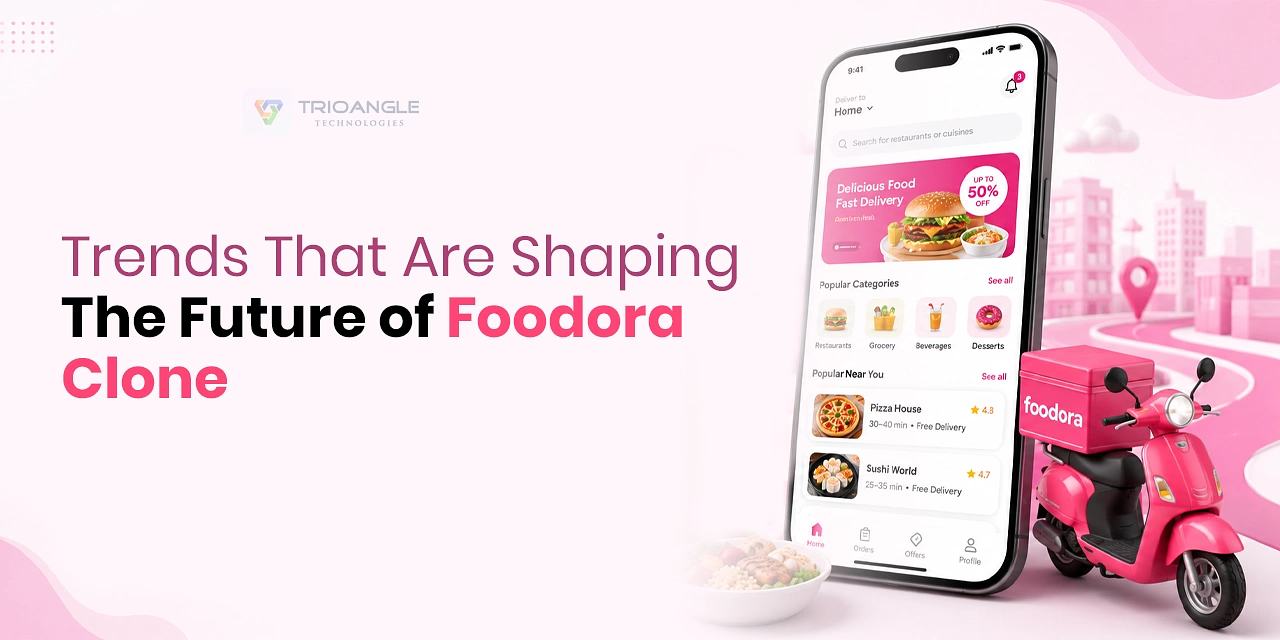
The Delivery platforms continued to see steady growth as more people started relying on online ordering in their daily lives. By 2026, the industry is still expanding, with new opportunities for businesses and more customers expecting faster and better services. A Foodora clone helps businesses adapt to these changes by offering a scalable platform with features that match modern delivery needs.
For small and medium businesses, this growth brings both challenges and possibilities. Customer expectations are changing quickly, and platforms that provide a smooth and reliable experience are more likely to grow in the future. Understanding these trends can help businesses prepare for the next stage of delivery growth.
Let’s explore the Key Trends of the Foodora clone
Key Takeaways:
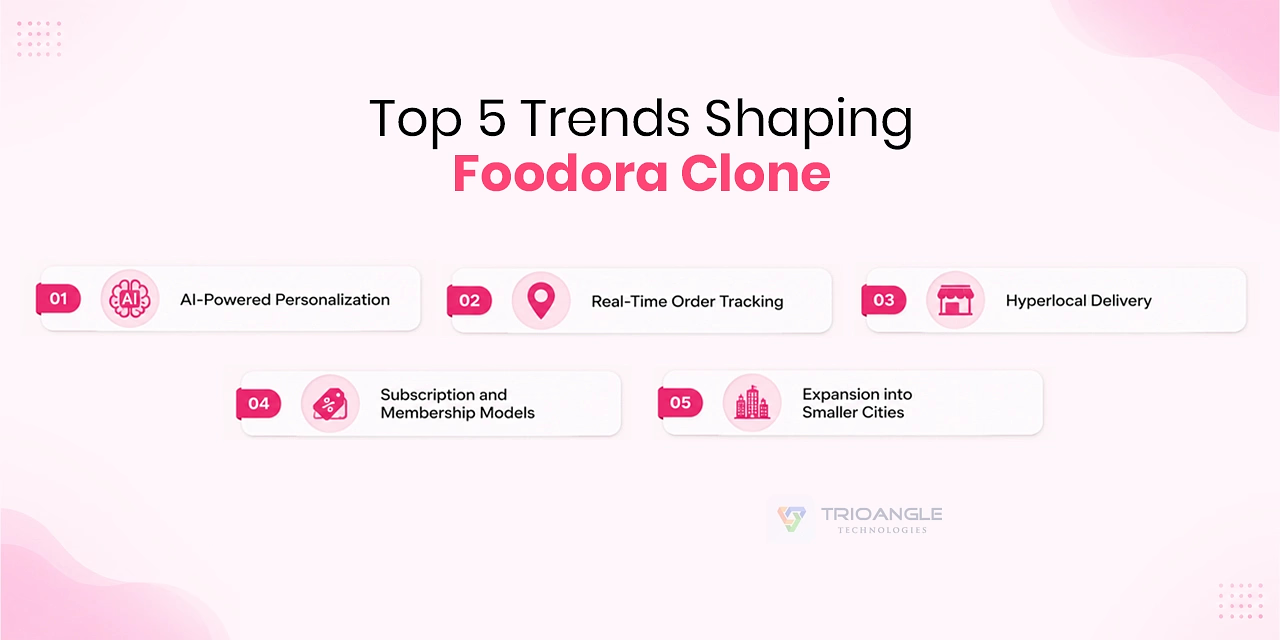
- AI-powered personalization helps the Foodora clone script to understand customer preferences and provide smarter recommendations, creating a more personalized user experience.
- Real-time order tracking improves transparency by allowing customers to track their deliveries and receive live updates throughout the delivery process.
- Hyperlocal delivery enables faster service by using nearby stores, restaurants, and delivery partners to reduce delivery time and improve efficiency.
- Subscription and membership models help businesses increase customer loyalty by offering benefits like free delivery, exclusive deals, and priority services.
- Expansion into smaller cities opens new growth opportunities by bringing multi-delivery services to emerging markets with increasing customer demand.
Top 5 Trends Shaping Foodora Clone
1. AI-Powered Personalization
A smart recommendation system can understand a customer’s ordering habits, like their usual items, preferred timing, and possible future needs. Whether they are ordering groceries, food, or a pharmacy refill, these suggestions make the app more useful and personalized.
Chatbots that handle order questions 24/7 without a human on the other end are also becoming table stakes. As your customer base grows, that kind of automation is what keeps support quality up without your costs climbing right along with it.
2. Real-Time Order Tracking
For a Foodora clone script, accurate order tracking depends on more than just the shortest route. It should also account for preparation time at the restaurant or store, traffic, weather, and delivery partner availability to deliver realistic arrival estimates.
3. Hyperlocal Delivery
As customer expectations continue to change, fast delivery services have become a major part of online ordering. Many platforms now deliver orders in just 10 to 20 minutes by using small local dark stores instead of one large warehouse
Companies keep small storage centers near customers so that orders can be delivered in just a few minutes instead of taking almost an hour. They also group two or three nearby orders into one trip. This helps make deliveries faster and allows delivery partners to earn more.
4. Subscription and Membership Models
Many people now order online on a regular basis, so platforms are introducing paid memberships to encourage them to keep using the service. Once customers subscribe, they are more likely to place orders more often because they want to make the most of the membership.
These memberships usually offer benefits such as free delivery after a certain number of orders, early access to discounts, and faster delivery during busy hours. This encourages customers to order more frequently while also giving businesses a more stable and predictable source of income.
5. Expansion into Smaller Cities
Multi-delivery services first became popular in large cities, but they are now expanding into smaller towns as demand continues to grow. More people in these areas are shopping online, creating new opportunities for businesses.
A Foodora clone brings shop owners, delivery partners, and service providers together on a single platform. It makes launching operations in a new city easier without requiring a large upfront investment. Business owners can manage all activities through one admin dashboard. Building your Foodora clone platform with scalable features helps you adapt to future growth and changing customer needs.
Final Thoughts
In today’s fast-paced delivery industry, adopting these trends in your Foodora clone script can help you provide a better user experience and stay ahead of the competition.
In this blog, we explored the key trends shaping multi-delivery apps like the Foodora clone. We discussed AI-powered personalization, real-time order tracking, hyperlocal delivery, subscription-based services, and expansion into multiple cities. By implementing these features, businesses can build a more efficient platform and create better experiences for customers, delivery partners, and service providers.
Want to build your Foodora clone?
Frequently Asked Questions
Q1. What is a Foodora clone?
A Foodora clone is a pre-built multi-delivery platform for food and grocery delivery that replicates the core features and functionality of the Foodora platform. It helps startups and entrepreneurs launch their own multi-delivery business similar to Foodora.
Q2: Is a Foodora clone suitable for small businesses?
Yes, A Foodora clone is a good choice for startups, local restaurants, grocery stores, and food delivery businesses. It helps you launch your platform quickly with all the essential features while saving time and development costs.
Q3. What are the latest trends in Foodora clone?
The latest trends in the Foodora clone are
- AI-Powered Personalization
- Expansion into Smaller Cities
- Real-Time Order Tracking
- Subscription and Membership Models
- Hyperlocal Delivery
Q4. How can AI improve a Foodora clone?
AI-powered features help a Foodora clone offer personalized food recommendations, optimize delivery routes for delivery partners, and improve overall platform performance. AI chatbots are available 24/7 to answer customer questions without human support, providing a faster and better user experience.
Q5. How long does it take to launch?
You can launch your Foodora clone platform in just 10–15 days. As a ready-made solution, it reduces development time because the essential features are already built.
Q6. How does the Foodora clone make money?
The Foodora clone script can make money in multiple ways, such as
- Restaurant Commissions
- Delivery charges
- Subscription Plans
- Surge Pricing
- Cancellation Fees
- Listing fee