
Today’s fast-paced life demands convenience at every turn, especially when it comes to home services. This is where UrbanClap (now Urban Company) comes into play.
An UrbanClap clone is a popular Indian home services app that connects millions of users with reliable service providers for a wide range of services like cleaning, plumbing, appliance repair, and more.
UrbanClap has not only simplified our lives but also generated revenue of over $100 million in 2022. These impressive revenue figures show UrbanClap’s success and are a testament to the potential of this market.
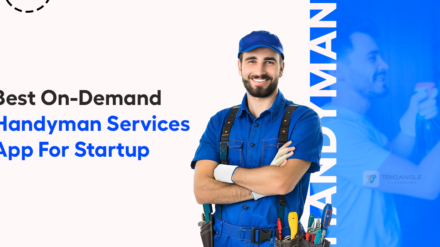
Are you ready to launch and monetize a handyman service app? Buckle up, this blog enlightens the top development phases and proven monetization methods of the UrbanClap clone app.
Before diving into overall methods, let’s first understand the UrbanClap clone app.
What is the UrbanClap Clone App?
An UrbanClap clone app is a mobile application that replicates the core functionalities of the original UrbanClap, connecting customers with local service professionals for various home service needs. These apps can be customized to cater to specific regions, service categories, and target audiences, offering a unique value proposition within the on-demand home service market.
Why choose a white-label UrbanClap clone in 2026?
Ready to wonder why many entrepreneurs choose a ready-made UrbanClap clone in 2026? Here are some core reasons:
Business Convenience
The handyman service business enters the market with its user-friendly infrastructure, pre-built workflows, core features, and admin controls that reduce technical complexity.
Faster Market Entry
Instead of building from scratch, entrepreneurs can launch with a ready-to-deploy solution easily. This minimizes development time and allows businesses to capitalize on market demand without delays.
Proven Revenue Sources
This home service app supports multiple revenue streams, including user booking fees, provider commissions, referral earnings, featured listings, and surge pricing. It helps startups increase revenue and app growth.
Customizable Solution
The UrbanClap clone is fully customizable for feature enhancements, UI design, service modules, and integration to meet business requirements, customer demands, and long-term success.
Improved User Experience
An UrbanClap clone delivers smooth navigation, quick bookings, and responsive design, aligning with modern user behavior and increasing conversion rates across Android and iOS platforms.
The key lies in offering a seamless experience, a wide range of verified professionals, and competitive pricing. But how do you turn these offerings into profit?
Let’s delve into the various monetization methods of the home service app like UrbanClap.
How Does the UrbanClap Clone Make Money?
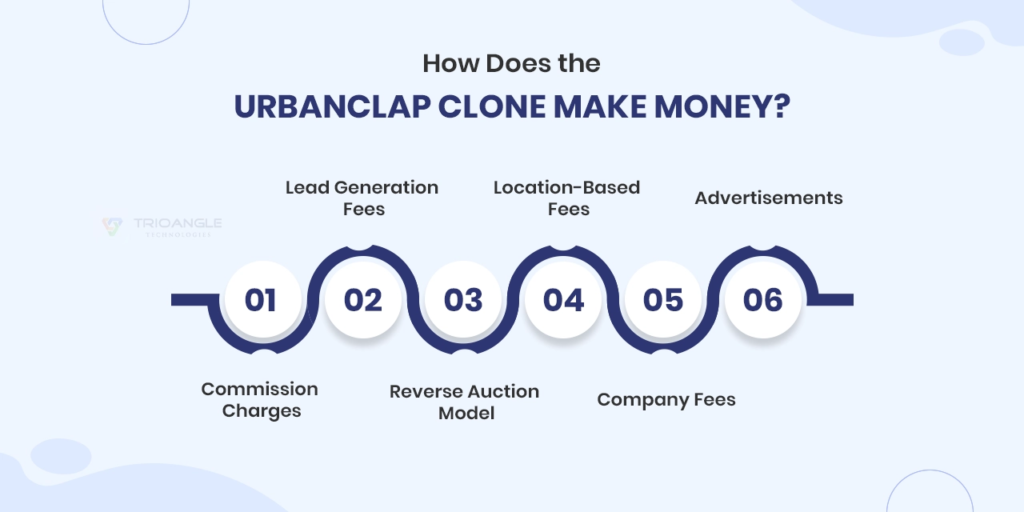
Creating an app like UrbanClap offers various monetization opportunities. Here are some smart monetization methods that enable you to drive profits in 2026 and beyond:
1. Commission Charges
The commission is one of the primary revenue features to include in your UrbanClap clone app, whereas the UrbanClap app generates around 85% of its total revenue. An on-demand service app like UrbanClap employs various commission structures tailored to different stakeholders and market conditions. They are
- Provider Commission
- Customer Booking Commission
Provider Commission
In this method, the app charges a commission on each service completed by a provider through the app. The commission rate typically ranges from 15% to 30%, depending on the service category and location. Providers may pay higher commissions as they receive more work from the platform.
Customer Booking Commission
In this model, the app charges a commission to customers when they book a service through the app. This commission can be a fixed fee (around $2 – $5) or a percentage (5 – 10%) of the service cost. This revenue stream helps cover operational expenses and boosts overall earnings.
2. Lead Generation Fees
Lead generation is another lucrative revenue stream for an on-demand services app, also considered the second most effective way for revenue generation.
In this approach, users specify their requirements and the platform recommends the service providers accordingly. Customers can either directly contact the service providers or request other customers to appoint them on their behalf.
In facilitating this connection, whereby the app leads service providers to customers seeking services and charges a lead generation fee. The lead generation fee is typically around $10 – $20 for each qualified lead.
3. Reverse Auction Model
In the reverse auction model, customers initiate the process by posting their service requirements on the platform and specifying a budget. Service providers then bid on the project by offering their services at competitive prices. Customers evaluate the bids received from providers based on factors such as expertise, pricing, and reviews. After reviewing the bids, the customer selects a provider whose bid best matches their requirements and budget.
Once the service is chosen and completed, the platform deducts a commission, typically ranging from 10-15%, from the final service cost paid by the customer to the provider.
4. Location-Based Fees
Location-based fees involve implementing dynamic pricing strategies based on the user’s geographical location. The concept revolves around charging slightly higher fees in areas with high demand or for premium services. By analyzing data on user locations and demand patterns, the app can adjust pricing to reflect the current market conditions accurately.
For example, during peak hours or in densely populated areas, the app may apply a surcharge to incentivize service providers and balance supply and demand. Conversely, in areas with lower demand, prices may be adjusted downward to attract more users.
This dynamic pricing model allows the on-demand UrbanClap clone app for handyman services to capture the true value of its services while remaining competitive and responsive to market fluctuations.
5. Company Fees
The company’s fee model involves charging both customers and service providers a fee for utilizing the UrbanClap clone platform and accessing its convenient services. This fee is a major revenue source for the company.
Customers may be charged for booking services or accessing certain premium features, while service providers offering the best handyman services through your platform may pay a commission or subscription fee for listing their services on the platform and gaining access to potential customers.
By collecting fees from both sides of the marketplace, the company can generate consistent revenue while facilitating transactions. Additionally, these fees help cover operational costs, invest in platform improvement, and maintain high service standards, ultimately contributing to the platform’s long-term success and sustainability.
6. Advertisements
Besides all the above-listed monetization methods, there is another way of earning more money with your Urbanclap clone app development is – advertisement. Collaborate with relevant businesses, suppliers, and providers to display targeted ads within your platform in exchange for the advertisement fees.
It’s important to ensure that these ads are unobtrusive and align with your user base. This can be a passive income source without impacting user experience.
Top 7 Phases to Build an UrbanClap Clone App
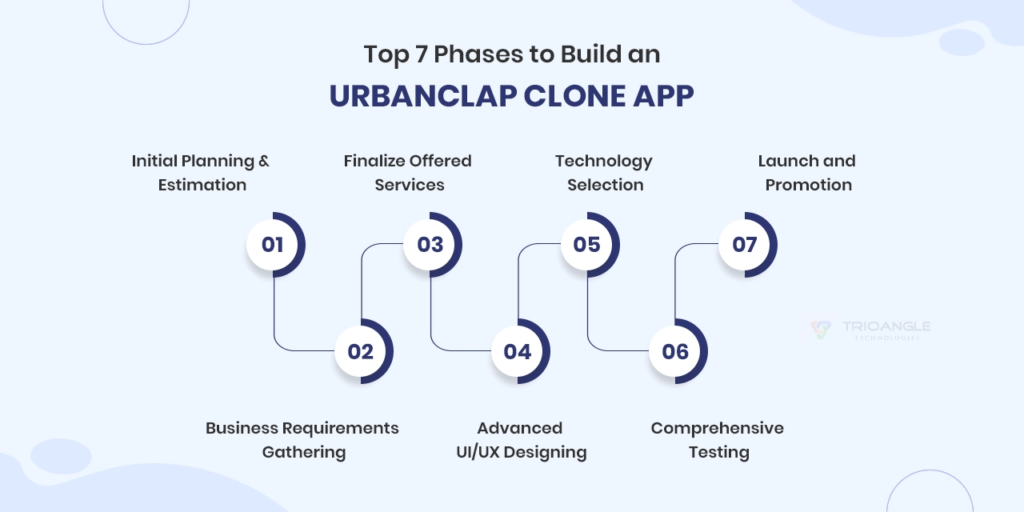
The top seven phases of UrbanClap clone app development streamline app launch, such as the following:
Initial Planning & Estimation
The primary phase involves defining the app’s core objectives, target audience, and scope. A detailed estimation of resources, budget, and timeline, ensuring the app starts on a structured path with clear expectations for development and future scaling.
Business Requirements Gathering
Collect detailed requirements from stakeholders, identifying functionalities and user expectations. Understanding the market, competitor analysis, and potential pain points helps you build a clear document that aligns with business goals and meets user demands.
Finalize Offered Services
Analyze on-demand user demand and identify the most required services for an UrbanClap clone platform. Categorize and structure these handyman services clearly within the app. Define pricing models, service availability, and provider eligibility criteria to ensure a well-organized and user-friendly service marketplace app.
Advanced UI/UX Designing
This phase focuses on crafting a user-centric and appealing design that enhances overall usability. Creative layouts, smooth navigation flows, and interactive prototypes are developed to ensure a seamless experience. It helps make service discovery simple, improve accessibility, and boost long-term user engagement and satisfaction.
Technology Selection
Choose an advanced and reliable tech stack, frameworks, and third-party integration tools. Use React Native or Flutter for mobile apps, Node.js/Laravel for the backend, and MongoDB/MySQL for databases, and integrate Stripe, Firebase, and AWS cloud services. This ensures smooth app performance and supports future updates.
Comprehensive Testing
Perform thorough testing plans, including functional, usability, performance, and security tests. Identifying and fixing bugs ensures reliability, a seamless user experience, and compatibility across devices. This phase guarantees quality standards before public launch.
Launch and Promotion
The UrbanClap clone app is officially launched on Android and iOS platforms and starts promotion through social media, SEO, influencer collaborations, and ads. It helps attract more users/service providers, ensuring early adoption, brand visibility, and a strong market presence.
Key Trends of the UrbanClap Clone App in 2026
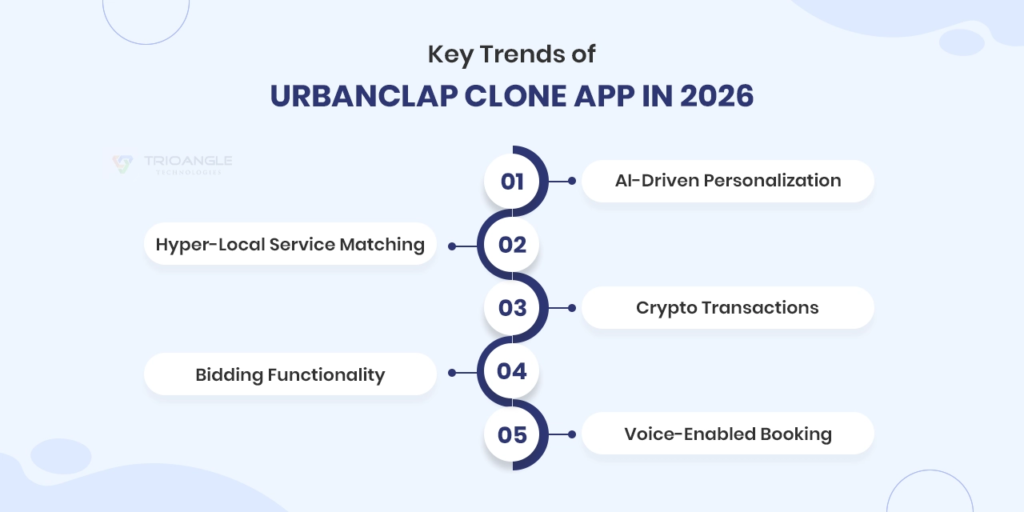
Here are the essential trends that help modernize handy service app development and attract global users.
AI-Driven Personalization
The UrbanClap clone script integrates AI that analyzes user behavior, location, and service history to recommend the right skilled professionals, preferred time slots, and pricing. It delivers faster bookings and higher user satisfaction.
Hyper-Local Service Matching
The on-demand handyman service app uses real-time location data and route optimization to connect users with nearby professionals efficiently. By analyzing location and travel routes, it ensures faster response times and lowers travel costs for service providers.
Crypto Payment Transactions
The integration of cryptocurrency payments is emerging as an innovative trend. By enabling crypto transactions such as Bitcoin or Ethereum payments, an UrbanClap clone can attract tech-savvy and global users. It offers enhanced security, transparency, and reduced transaction fees for cross-border services.
Bidding Functionality
Bidding functionality allows service providers to submit customized quotes for customer requests. Users can compare every request based on pricing, ratings, experience, and reviews before making a decision. This feature encourages competitive pricing and increases transparency.
Voice-Enabled Booking
By integrating AI-powered voice assistants like Siri and Alexa into your Urbanclap clone, users can search for services, check availability, and book skilled professionals using simple voice commands. This feature improves accessibility, enhances user convenience, and speeds up the booking process
Boost Your Revenue with UrbanClap Clone App Now!
Hope this blog provides detailed insights for you. Consider your target audience, local market dynamics, and competitor landscape to choose the UrbanClap clone script and additional revenue streams.
Implementing these development phases, monetization strategies, and key trends helps enhance your UrbanClap clone app to thrive in the ever-evolving home service market.
With a focus on value and convenience, you can turn your app into a profitable venture, catering to the growing demand for reliable on-demand services.
Let’s get started!
Are You Ready to Build Your UrbanClap Clone in 2026?