

With the global eCommerce marketplace sector projected to reach $77.58 trillion by 2031, it’s safe to say you see strong opportunities in the space and are interested in launching your own online marketplace.
So as a smart founder who wants to enter the market affordably, you might be considering your options for using a ready-made Amazon clone that also allows you to enter the eCommerce industry faster.
In this blog, we’ll explore how to build an eCommerce marketplace affordably, the development considerations involved, the blueprint behind launching one, and the role pre-built marketplace solutions play in speeding up the process.
Key Takeaways from This Blog
- Building an Amazon-like marketplace using a ready-made solution can be a practical option for founders who want to avoid custom development time and expenses.
- Core marketplace features like inventory management, secure payments, and order management are commonly found in successful eCommerce platforms.
- Choosing the right technology and planning for scalability are just as important as selecting the development approach.
- The ready-made solution should be flexible enough to support your branding, business model, and future growth.
- Building a successful Amazon-like marketplace starts with understanding your market, choosing the right approach, adding the key features, testing properly, and launching strong.
Without much ado, let’s get started!
Is Developing an eCommerce App Costly?
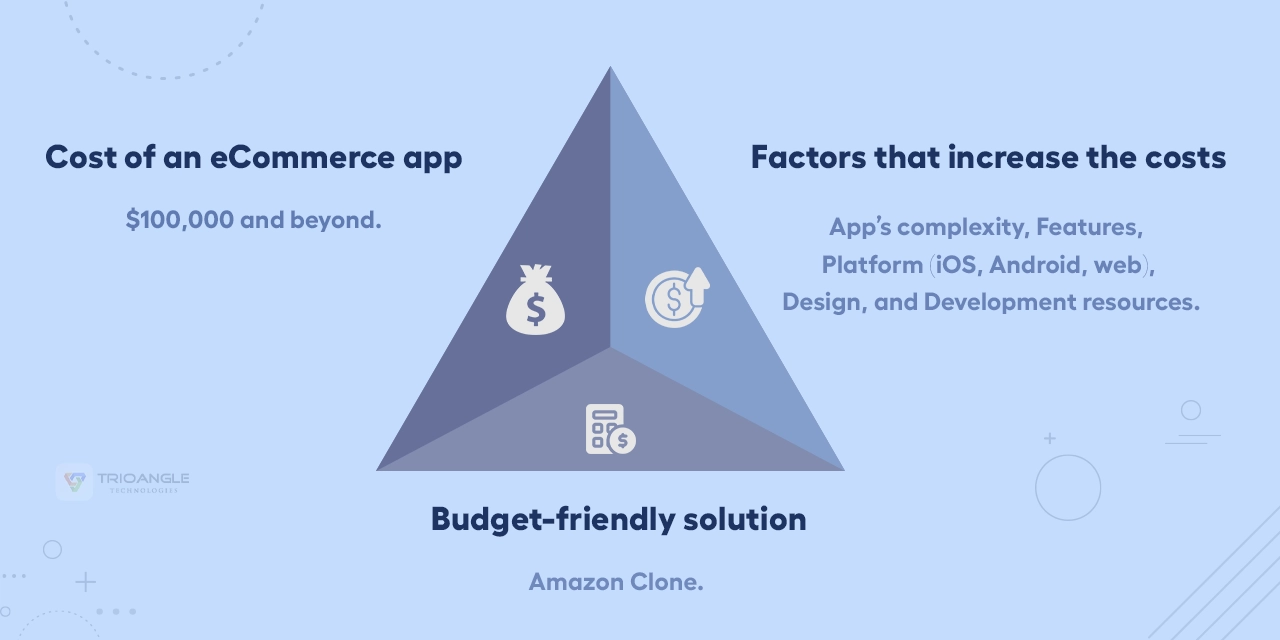
Straight to the point, the cost of developing an eCommerce app falls between $100,000 and beyond. It may seem pricey if you’re planning to complete the project within your chalked out budget. Various factors will move up your expenditure for sure. Requirements like the app’s infrastructure complexity, features, platform (iOS, Android, web), design, and development resources can vary for every project.
Luckily, launching an Amazon-like marketplace doesn’t have to mean building everything from scratch. A ready-made Amazon clone helps reduce development time and costs by providing the core features needed to get started.
What is an Amazon Clone?
An Amazon clone is a pre-developed software solution that replicates the core functionalities and features of the Amazon eCommerce platform. It allows businesses to launch their own online marketplace with built-in features such as product listings, shopping carts, payment gateways, and customer reviews, without the need for expensive custom development.
How a White Label eCommerce Solution Reduces Development Costs
Developing a multi-vendor marketplace from scratch requires notable investment in planning, design, development, testing, and deployment. Since a white label Amazon clone already includes the essential marketplace framework, businesses can focus on customization instead of building every feature from scratch. This reduces development time, lowers costs, and accelerates time to market.
Pre-designed Features + Shorter Development Time = Cost-Effective Solution
Beyond the cost savings, there are several other reasons why many businesses choose this development approach.
7 Key Benefits of Choosing an Amazon Clone
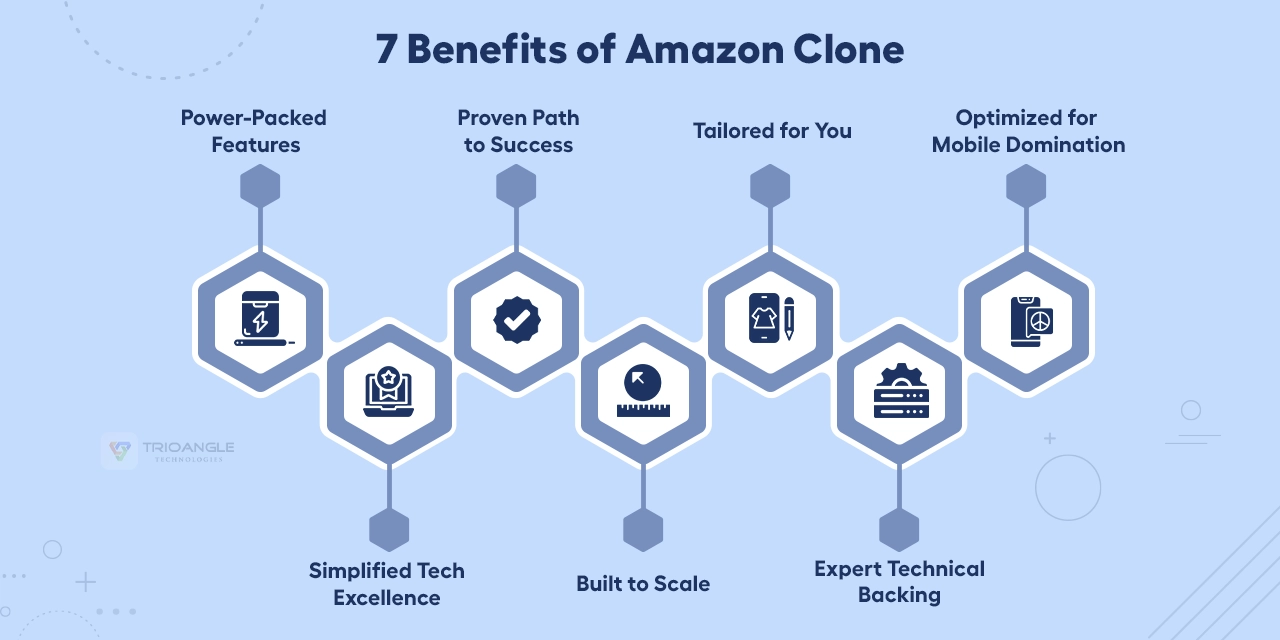
A lot of businesses prefer an Amazon clone since it is a faster approach to start an online marketplace. Here are seven practical benefits to this strategy.
1. Built-In Features for Marketplace Operations
Most Amazon clones include the core features needed to run a successful marketplace.
These features often include robust inventory management, secure payment gateways, customer reviews, and a recommendation engine. By starting with these features in place, you can provide a seamless shopping experience to your customers from day one.
As Tony Hsieh, founder of Zappos, famously said, ‘Customer service shouldn’t just be a department; it should be the entire company.’
2. Lower Technical Complexity
Creating an eCommerce app from scratch involves a steep learning curve and dealing with complex technical challenges. You’d need to understand various programming languages, databases, and server management, or else you have to outsource the developer team to work on your project.
With a ready-to-launch clone script, the technical complexity is significantly reduced.
You don’t worry about coding everything from the ground up or managing complex server infrastructure. The clone’s simplicity allows you to focus less on the technical intricacies, making it an attractive option for non-technical entrepreneurs.
3. Proven Marketplace Model
Amazon is a multinational eCommerce giant with a proven track record of success. By utilizing an Amazon clone, you can tap into the features and functionalities that have made Amazon so successful, such as user-friendly navigation, secure payment gateways, and an efficient search and recommendation system.
This provides businesses with a familiar marketplace setup that can be freely customized to their needs.
4. Scalable Architecture
As your eCommerce business expands, you’ll need a platform that can scale with your increasing demands.
The platform is designed to scale as your customer base and product catalogue grow. This flexibility ensures that your eCommerce app can adapt to your evolving needs.
5. Flexible Customization Option
A ready-made marketplace solution provides a solid foundation; it is also highly customizable. You can tailor-make the clone to suit your brand’s identity, design preferences, and unique selling propositions.
This level of customization allows you to assemble the app that finely serves your target audience while differentiating your eCommerce app from others using the same clone.
6. Expert Maintenance Support
Many white label eCommerce platform providers offer technical support and regular updates, helping businesses keep their platforms secure and up to date.
You can ensure your application is free from any elaborate technical issues and it provides uninterrupted service to your customers. This technical support can also save you time and resources in the long run.
7. Responsive Design for Mobile Commerce
According to Pew Research Center, a vast majority of U.S. adults (76%) have purchased products online using a smartphone at some point in their lives. Ultimately, with the increasing use of mobile devices for online shopping, it’s crucial to have a mobile-responsive eCommerce app.
Amazon clones come with mobile optimization features, ensuring that your marketplace app functions smoothly on smartphones as well as tablets.
Blueprint for Building an Amazon-Like Marketplace
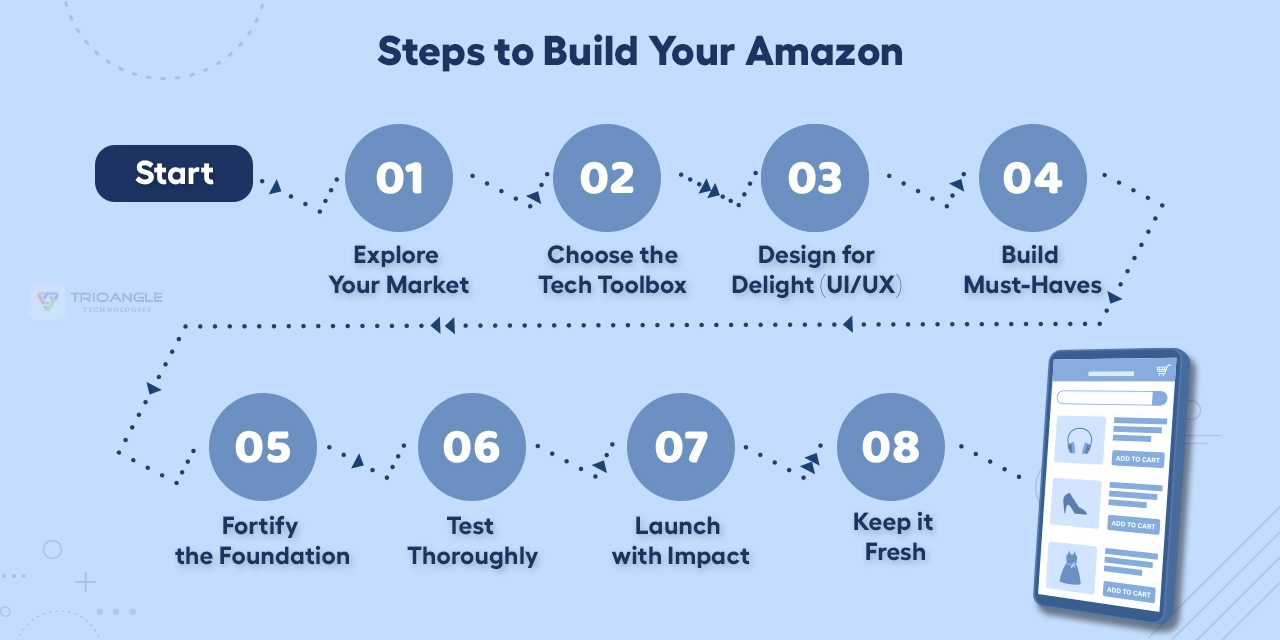
Now that you understand the fundamentals, let’s explore the blueprint for building a successful Amazon clone marketplace.
“Opportunities don’t happen, you create them.”
— Chris Grosser
1. Explore Your Market
Begin by conducting thorough market research to understand your target audience’s preferences, current market trends, and the competitive landscape.
Understanding your market early makes it easier to identify opportunities and build a marketplace that meets customer expectations.
2. Choose the Tech Toolbox
Selecting the appropriate technologies and frameworks is pivotal for the success of your project. Consider factors such as scalability, security, and compatibility with your development team’s expertise.
A modern technology stack is the foundation of any successful online marketplace, enabling secure operations, reliable performance, and the flexibility to support a growing multi-vendor eCommerce marketplace.
3. Design for Delight (UI/UX)
Design an intuitive and visually appealing user interface (UI) that mirrors Amazon’s renowned layout and functionality. Focus on creating a seamless user experience (UX) to enhance usability and engagement.
Pay attention to responsive design principles to ensure compatibility across various devices and screen sizes.
4. Build Must-Haves
Implement essential features that are fundamental to an eCommerce platform.
This includes user registration and authentication, comprehensive product listings with search and filter options, a shopping cart for seamless shopping experiences, and integration of secure payment gateways to facilitate transactions.
5. Fortify the Foundation
Build a robust backend infrastructure capable of managing user data securely, product inventory, order processing, and transaction management.
Implement scalable architecture to accommodate growth and ensure optimal performance under varying loads.
6. Test Thoroughly
Conduct rigorous testing across all stages of development to identify and rectify any bugs or inconsistencies.
Perform functional testing to ensure all features work as intended, usability testing to gauge user interaction, and security testing to safeguard against potential vulnerabilities.
7. Launch with Impact
Prepare for the launch of your Amazon-like marketplace clone by deploying the application on reliable servers or cloud platforms.
Ensure all necessary configurations are in place for a smooth user experience from the moment of launch. Consider implementing analytics tools to monitor app performance and user behavior post-launch.
8. Keep it Fresh
Continuously monitor the performance of your Amazon clone post-launch. Regularly update the application to incorporate new features, enhancements, and security patches.
Respond promptly to user feedback and market trends to stay competitive and meet evolving consumer expectations.
Following these steps will help you build your Amazon-like marketplace on a strong white-label foundation, with the user experience and scalability needed for long-term growth.
Conclusion
In summary, building an Amazon-like marketplace with a ready-made solution can help reduce development time and costs while giving you the flexibility to customize the platform around your business goals.
While an Amazon clone serves as the foundation, your business plan, marketing efforts, and customer experience will ultimately determine its success.
If you’ve already validated your marketplace idea and are ready to start development, an Amazon clone script is worth a look. It comes with a production-ready starting point that helps you bypass much of the initial development effort and cost compared to building from scratch.