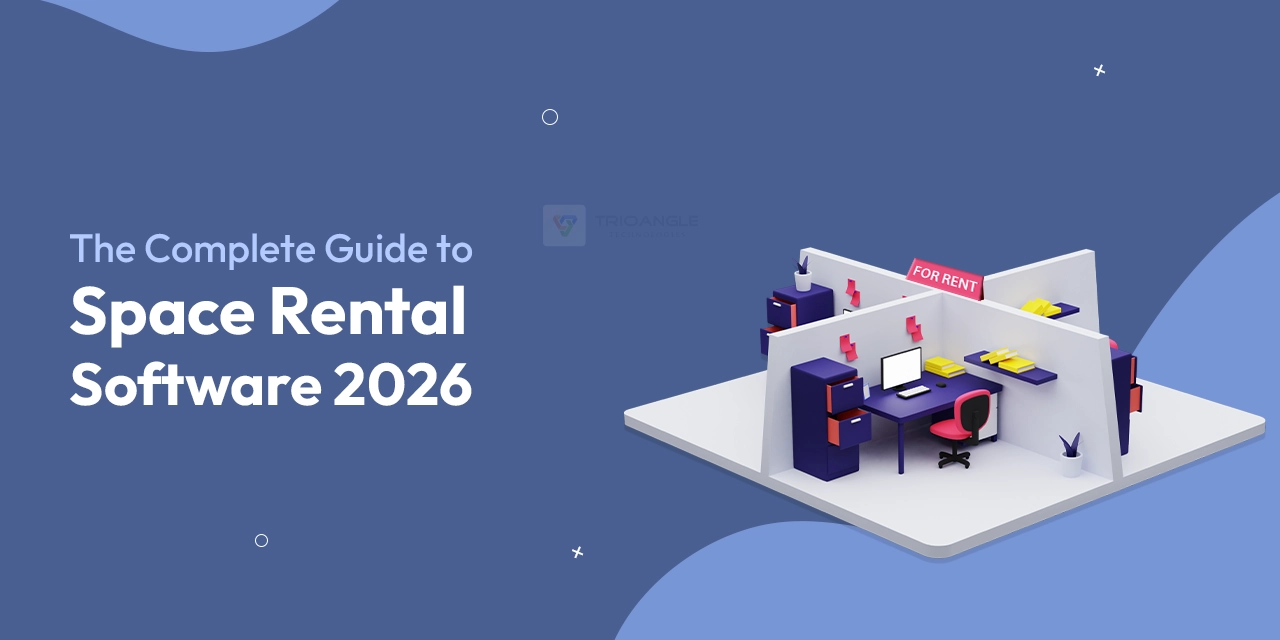
In today’s modern world, many individuals and businesses prefer space rentals for their work, events, and other activities because they offer greater flexibility and affordability compared to purchasing or leasing a property for short-term needs. Spaces can be rented for a few hours, days, weeks, or even months based on demand.
This growing trend creates a great opportunity for entrepreneurs to launch their own space rental platforms.
In this blog, we will explore the key features of space rental software, the revenue streams it enables, how it differs from traditional booking systems, and how it supports local businesses.
No more delays, let’s get started.
Okay, first, we’ll define space rental software, so you understand what it is and how it can help you launch your platform.
Key takeaways
- Space rental software helps businesses manage listings, bookings, payments, and users through a single digital platform.
- Modern platforms include advanced features like calendar integration, multiple payment methods, multi-location and user management, and smart management dashboards.
- The software supports different types of spaces such as offices, event venues, coworking spaces, meeting rooms, and online marketplace spaces.
- Businesses can generate revenue through booking commissions, subscription plans, service fees, and premium listings.
- Compared to traditional booking systems, space rental software offers automation, efficiency, and a better user experience.
- Choosing the right solution requires focusing on scalability, security, customization, and ease of management for long-term business growth.
What is Space Rental Software?
Space rental software is designed to manage, schedule, track, and process bookings for rental spaces through a single platform.
It simplifies the entire booking process by integrating features such as online payments, real-time availability, and customer information management.
Additionally, it allows businesses to list and manage multiple types of spaces in one centralized system. Overall, it helps businesses save time, streamline operations, and improve overall efficiency in managing their rental spaces.
Check Out the Topic: How Space Rental Software Can Help You Grow Your Business
Features of the Best Space Rental Software in 2026
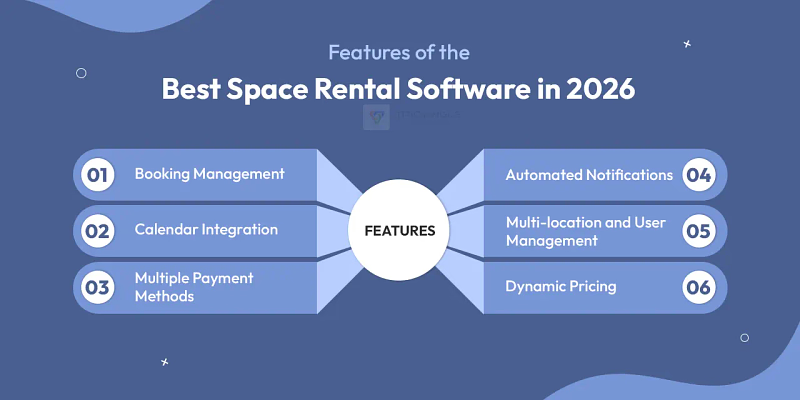
In today’s digitalized world, running a platform with only basic features is no longer enough. You need to provide smart and user-friendly features that create convenience and make the app easy for users to navigate.
In 2026, people prefer platforms that eliminate the stress of complicated processes and allow them to book spaces quickly and effortlessly, ideally with just one tap.
Booking Management
Booking management is an important feature that allows customers to browse, book, and pay for rental space, while admins can manage the booking process, track availability, and update schedules, reducing difficulties.
Calendar Integration
This feature displays all bookings in the calendar view, allowing the administrator to manage reservations and eliminate double bookings on the platform.
Customers can also view available space and bookings, reducing the need for manual confirmation and confusion.
Multiple Payment Methods
The space rental platform should support multiple payment methods, such as credit and debit cards, and other payment gateways, which increases the convenience, and the platform provides an invoice after every successful transaction. This simplifies the financial management for both customers and admins.
Automated Notifications
The Automated Notification feature automatically sends updates to customers about bookings, cancellations, and other important changes. This helps users stay informed about their booking status and any offers available on the platform.
It also helps re-engage inactive users by notifying them about updates and promotions, encouraging them to return and use the platform again.
Multi-location and User Management
With this feature, the admin can manage bookings from multiple locations and handle user management through a single dashboard. This improves overall operational efficiency by centralizing control.
Additionally, admins can assign specific roles, such as sub-admins, to manage operations for different locations.
Dynamic Pricing
This advanced feature automatically adjusts the price of spaces based on demand, time slots, and peak hours. By dynamically updating the pricing, it helps businesses maximize revenue during high-demand periods while maintaining competitive pricing during low-demand times.
These are the important features of the space rental software that offer convenience in using the platform.
Different Types of Space Rentals
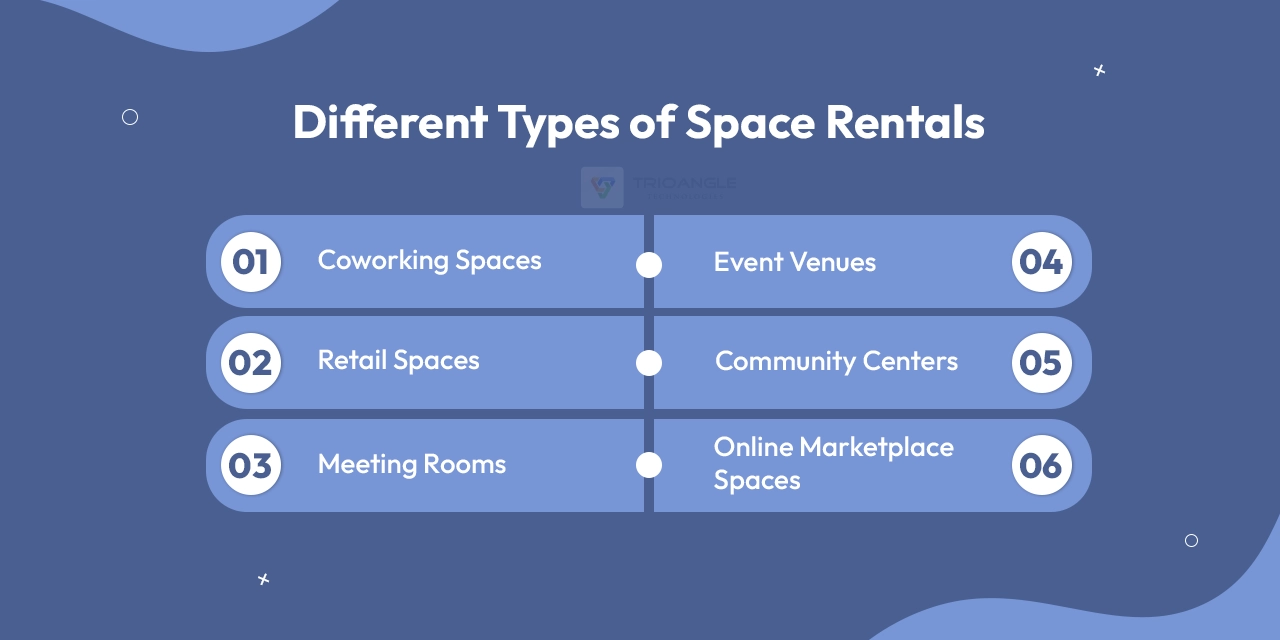
The space rental software includes space types for individuals and businesses, covering workspaces, events, and community activities.
1. Coworking Spaces
- According to the business research company, the global coworking space market is expected to reach $30.12-$33.26 billion in 2026, increasing at a 15% CAGR, led by growing interest from startups, freelancers, and remote-first organisations.
- Coworking spaces are shared workspaces where individuals or groups of people can rent desks, private office rooms, together with additional amenities such as wifi internet, conference rooms, and opportunities for networking.
2. Retail Spaces
- Where entrepreneurs set up their stores or pop-up shops in rented spaces, this is useful for tiny brands and seasonal businesses that may not want to commit to long-term leases.
3. Meeting Rooms
- WorkInSync reports that meeting room demand in flexible office spaces surged by 73% in 2026, as businesses increasingly adopted on-demand workspace and space rental solutions.
- Meeting room rentals are mostly utilised for professional client meetings, team conversations, and presentations. And these rooms are frequently rented on a daily or hourly basis.
4. Event Venues
- The market for event venue rentals is expected to increase at a compound annual growth rate (CAGR) of 11.3% from its 2024 valuation of $12,200 million to $25,320 million by 2034.
- Conferences, workshops, and social gatherings can all take place in event venues. Banquet halls, conference centers, outdoor settings, and hotels are some of the options.
5. Community Centers
- Community centers are commonly used for local activities such as training sessions, cultural programs, educational events, and social activities. Many organizations and groups rent these spaces to conduct workshops, meetings, and other community-related events.
6. Online Marketplace Spaces
- Online marketplaces where multiple property owners may list their available spaces for rent. They enable customers to search, compare, and book many different types of spaces on a single platform.
The various types of space rentals discussed above provide users with convenience in the form of affordability.
How Space Rental Software Makes Money
The space rental software generates revenue through subscription plans, listing and commission fees, and more. Come on lets see them in detail
Commission on Bookings
- Commission on bookings means that the software collects a commission for each successful booking made through the platform. This feature helps to create a consistent revenue stream.
Listing Fee
- The platform can charge a percentage of the amount for host to list their properties, such as coworking spaces, retail spaces, event venues, and more on the platform, which gives a decent income for the platform owner.
Subscription Plans
- Hosts can pay a monthly or yearly subscription fee to access platform benefits such as priority listings, advanced analytics tools, and other premium features.
Premium listings
- Space owners can pay a fee to place their listings at the top of search results or in featured sections. This increases the visibility of their spaces and helps attract more bookings on the platform
Membership Plans
- If the guest wants to use the spaces on a regular basis, they can buy membership plans for coworking and meeting rooms. This is another way to make money from the software.
Service Addons
- Software can offer an additional service fee for cleanings, equipment rentals, insurance, and event management.
- By integrating these services on the platform, it not only helps increase revenue but also improves the user experience.
Advertising and Partnerships
- The software allows you to promote the brands and collaborate with others, such as local companies, event organisers, and service suppliers.
Okay, next, we will move on to how the space rental software differs from the traditional booking system
Space Rental Software vs Traditional Booking Systems
This comparison helps readers understand why space rental software is essential in the modern world and how it can improve their rental business. It also shows how the software enhances overall operational efficiency.
| Factors | Space Rental Software | Traditional Booking System |
| Efficiency and Time Saving | Using space rental software helps reduce manual errors and save time by automating bookings, availability checks, and payments. It also allows users to quickly search and book spaces online, making the entire process faster and more convenient for both businesses and customers. | In traditional space rental booking, the process takes more time and effort because reservations are usually managed through phone calls, spreadsheets, and emails. |
| Error Reduction & Automation | The software automatically updates availability, transactions, and sends the booking confirmations. This helps to reduce double booking and pricing errors | Manual updates lead to multiple bookings, inaccurate pricing, and missed reservations. |
| Reporting & Business insights | The software comes with built-in analytics tools that analyse trends, revenue, and space bookings, allowing the business to make better decisions. | Limited reporting due to a lack of data, making it impossible to analyse overall performance. |
| Scalability for Multiple Locations | It allows administrators to manage spaces across multiple locations from a single centralized dashboard. | Managing multiple locations manually is complex and requires a separate tracking system |
Finally, space rental software improves overall operational efficiency, automation, and scalability over traditional space renting systems.
Key Factors to Consider Before Choosing Space Rental Software
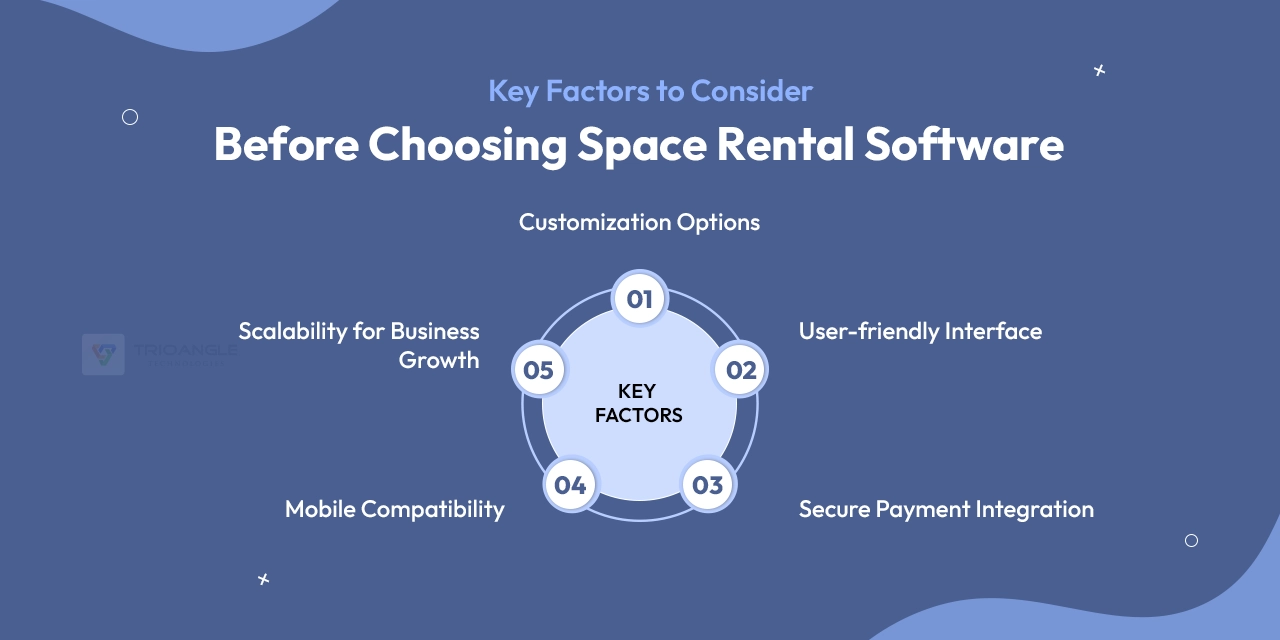
In this section, we will explore the key factors to consider when choosing space rental software. The software should not only address current business needs but also have the capability to support long-term growth.
Customization Options
The software should allow businesses to customize the platform’s features, design, and functionality according to their specific needs. Every space rental business has unique requirements, such as different types of spaces, pricing models, and rental options.
Therefore, having flexible customization is essential for running the platform efficiently and meeting business goals.
User-friendly Interface
While choosing space rental software for your business, many overlook the importance of the interface, but it plays a crucial role in the platform’s success. A software with an easy-to-use interface stands out in a crowded market.
Make sure the platform allows both customers and admins to effortlessly list spaces, manage bookings, and track payments. A well-designed user interface encourages users to engage with the platform regularly and enhances their overall experience.
Secure Payment Integration
Next, check if the software has secure payment integration, as it helps build trust among users. The platform should support multiple payment gateways, ensure secure transactions, and include features like invoicing and payment tracking for a seamless experience.
Mobile Compatibility
In today’s smart world, everyone uses smartphones for online bookings, so your business must be capable of running smoothly on mobile devices.
With an easy-to-use interface, users should be able to search and book spaces, make payments, and list their spaces without any difficulties, encouraging them to engage with the platform regularly.
Scalability for Business Growth
As your business grows, the platform should be able to handle large amounts of user data, listings, and transactions without affecting performance. It should also allow you to add new locations and expand into different niches. Choosing a scalable platform is therefore essential for supporting your long-term growth.
So, consider these factors while selecting the space rental software in 2026
Wrapping Up
In this blog, we discussed what space rental software is, its key features in 2026, the different types of spaces that can be rented, and how these platforms generate revenue.
We also compared it with traditional booking systems and explored the important factors to consider before choosing the right solution for your space rental business.
FAQ – Frequently Asked Questions
Space rental software is designed to manage bookings, track availability, and process payments for rental spaces through a single dashboard, simplifying the entire space rental and booking process.
The space rental software can manage different types of rental spaces like coworking spaces, event venues, meeting rooms, retail spaces, and parking areas, all from a single platform.
Space rental software helps business growth by automating bookings, enhancing visibility, managing multiple listings, and offering secure payment methods. It also enables businesses to monetise empty space and reach new customers through online platforms.
Yes, space rental software is suitable for small businesses because it helps them reach a wider audience and simplifies the processes of booking, listing spaces, and handling payments.
The best space rental software should have features like space listing management, advanced search filters, real-time booking calendars, secure payment methods, automated notifications, and an easy-to-use admin interface.
Are You Ready to Build Your UberEats Clone App?